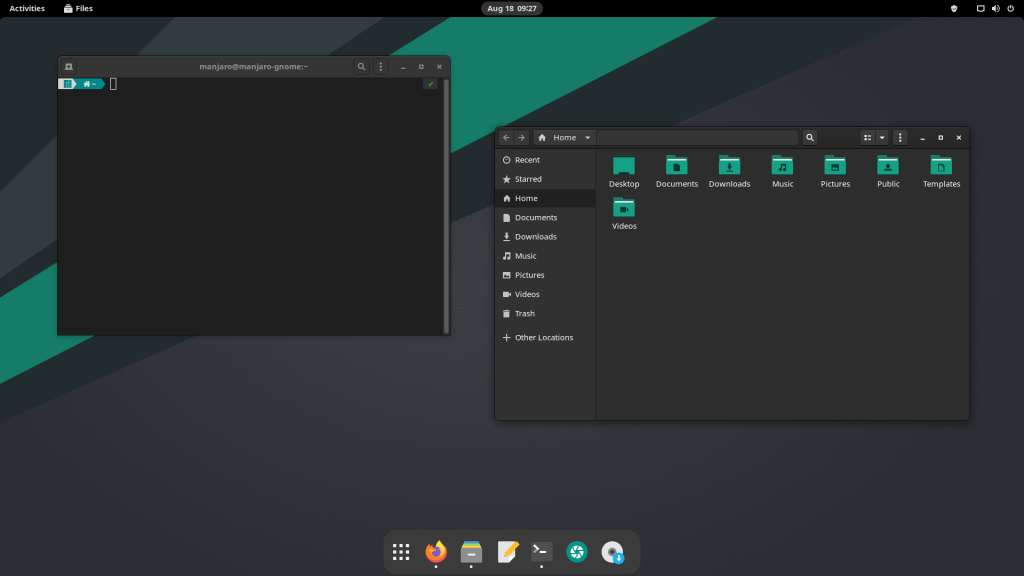
If Arch Linux is a high-performance engine delivered to your house in 5,000 separate pieces, Manjaro is that same engine pre-assembled, polished, and handed to you with a set of keys and a cup of coffee. It offers the speed and rolling-release glory of its father, Arch, but with a layer of “user-friendliness” that makes it actually usable by people who have social lives. It’s the perfect middle ground for those who want to use the AUR but don’t want to spend their Saturday morning manually configuring a bootloader.
Manjaro first hit the scene in July 2011, founded by Roland Singer, Guillaume Benoit, and Philip Müller. It was born from a simple mission: take the robust, independently developed Arch Linux base and make it accessible to everyone, regardless of their technical background.
In the Linux world, Manjaro is the cool cousin who knows all the technical shortcuts but doesn’t make you feel bad for asking where the “Start” menu is. With its own hardware detection tool (MHWD) and a curated repository system that holds back packages just long enough to make sure they won’t blow up your kernel, it’s the distro that lets you live on the edge—with a very comfortable safety net.
The Good Stuff
Pamac: The best GUI package manager in the game, making the AUR feel like a standard app store.
Hardware Detection: It identifies your GPU and installs drivers automatically. No more “nouveau” nightmares.
The Wiki: Arguably the best documentation in the entire tech industry.
The Reality Check
The “Held Back” Delay: Packages are delayed ~2 weeks for “stability,” which can occasionally break AUR dependencies.
Development Drama: The team has had some historical “oopsies” (like letting SSL certificates expire—multiple times).
Not “True” Arch: Elitists will still remind you that you didn’t install it “the hard way.”