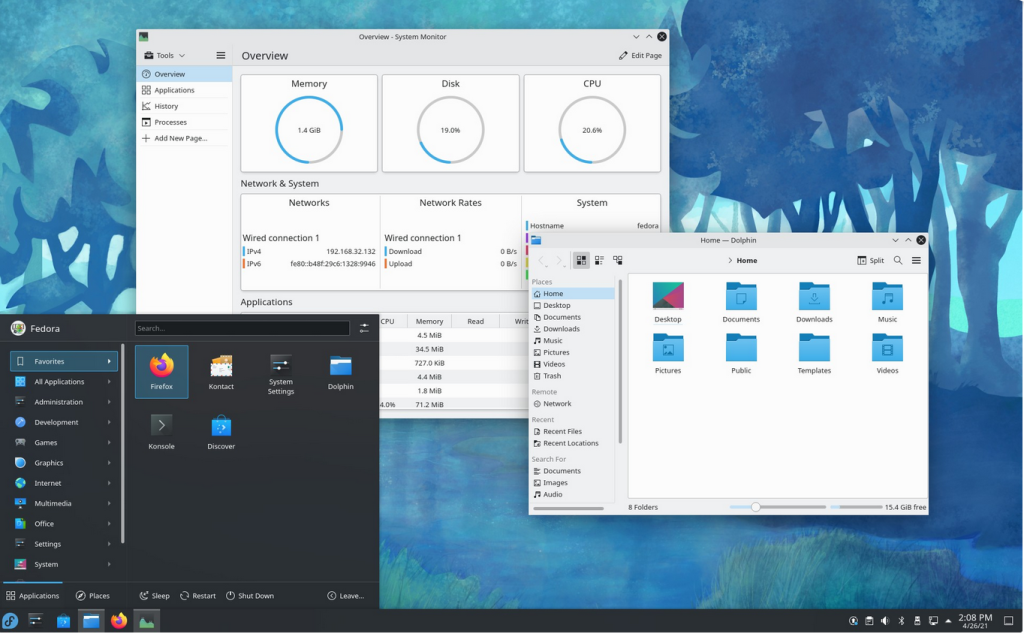
If you like your software so fresh it’s practically still in the oven, Fedora is your kitchen. It’s the primary testing ground for Red Hat Enterprise Linux (RHEL), meaning it’s where all the cool new toys—like Wayland, PipeWire, and Btrfs—get their first real-world workout. It’s a distro for the pioneers, the developers, and the people who aren’t afraid of a “System Update” notification appearing every thirty seconds.
Fedora was launched in 2003, born from the merger of the volunteer-run Fedora Linux project and Red Hat Linux. When Red Hat decided to pivot exclusively to the enterprise market, they created Fedora as the community-driven “upstream” source, ensuring a constant flow of innovation from the FOSS community back into their corporate products.
Choosing Fedora means choosing “Vanilla GNOME” and a philosophy that strictly adheres to free software. It doesn’t hold your hand with proprietary codecs or “easy” drivers out of the box, but once you set up the RPM Fusion repositories, you’ve got a system that is remarkably polished, incredibly fast, and consistently ahead of the curve. It’s the distro for those who want to live in the future, today.
The Good Stuff
Technological Leader: You get the latest kernel and desktop features before almost anyone else.
DNF Package Manager: Intelligent, robust, and handles dependencies like a professional.
Corporate Backing: Sponsored by Red Hat, ensuring high-quality engineering and security (SELinux).
The Reality Check
Short Lifecycle: Versions are only supported for about 13 months; get ready for frequent upgrades.
Strictly Free: No proprietary drivers or codecs by default—you’ll be hunting for RPM Fusion immediately.
Update Fatigue: If you hate seeing “New Updates Available” every morning, this will test your patience.