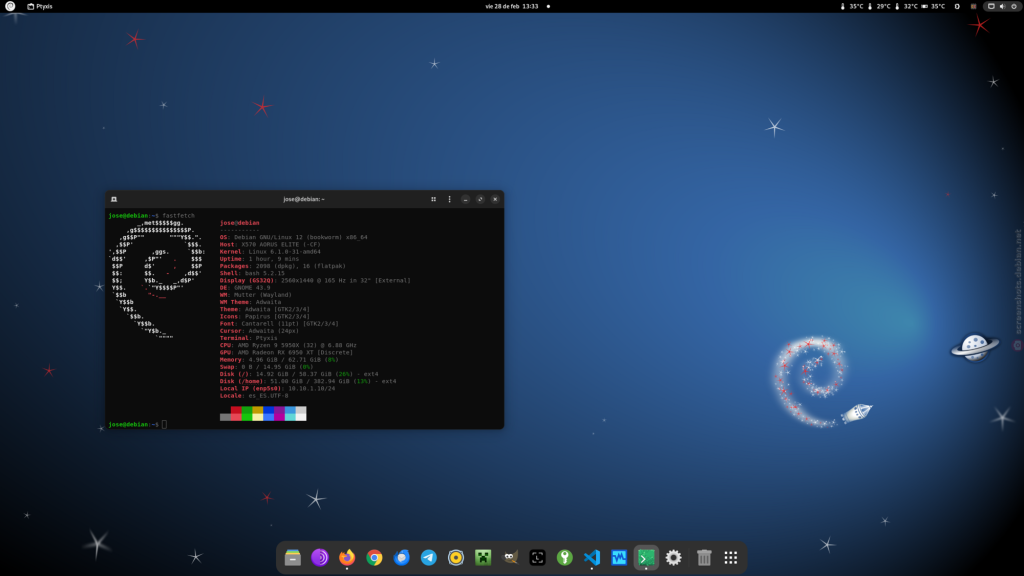
If you’re looking for the excitement of a system crash or the “thrill” of fixing broken dependencies every Tuesday, keep moving. Debian is the OS for people who want their uptime measured in years and their stability levels set to “immovable object.” It’s the granddaddy of the Linux world—conservative, reliable, and fundamentally opposed to anything that hasn’t been tested for a decade.
Debian was founded in 1993 by the late Ian Murdock, making it one of the oldest surviving distros. The name is a portmanteau of his then-girlfriend’s name, Debra, and his own, Ian. Since its inception, it has remained a purely community-driven project governed by a strict Social Contract and Free Software Guidelines.
Running Debian Stable is like owning a well-maintained 1990s Volvo: it’s not flashy, it won’t win any drag races, but it will literally never die. It’s the foundation upon which giants like Ubuntu and Kali are built, proving that while everyone else is out chasing trends, Debian is busy holding the entire internet together on its back.
The Good Stuff
Rock Solid: You can basically forget the ‘reboot’ command even exists.
APT Power: The Advanced Package Tool is still the gold standard for package management.
Architecture Support: It runs on everything from a toaster to a mainframe.
The Reality Check
Ancient Packages: “Stable” is often a polite word for “outdated.”
The “Free” Struggle: Getting proprietary Wi-Fi drivers to work can be a spiritual test.
No Hand-holding: The installer and setup expect you to know your way around a terminal.